Gas vs. Induction: Which One is Actually Faster for a Busy Café?
By paramount
In a busy café, maintaining speed and consistency is essential for smooth daily operations. Kitchen efficiency depends greatly on how quickly cooking equipment responds during peak hours. Choosing between gas and induction systems is an important step in setting up a café kitchen that can handle continuous demand without delays.
At Paramount Food Service Equipment Solutions, we support cafés and food businesses across the UAE, Qatar, Oman, Bahrain, and India with reliable kitchen equipment designed for performance and efficiency. Understanding the difference between gas and induction helps in selecting the most suitable solution for modern café operations.
Gas Cooking in Commercial Café Kitchens
Gas cooking remains a widely used option in professional kitchens due to its flexibility and familiarity. It allows chefs to control heat visually and adjust it instantly during cooking.
Key features of gas cooking equipment:
- Immediate flame response for quick heat adjustments
- Suitable for a wide range of cookware
- Ideal for traditional and flame-based cooking methods
At the same time, gas systems release heat into the surrounding environment, which can affect kitchen temperature and slightly impact efficiency during busy hours.
Induction Cooking for Cafés
Induction cooking is becoming increasingly popular in modern café kitchens. It focuses on direct heat transfer, making cooking processes faster and more controlled.
Why induction is preferred in cafés:
- Faster heating compared to traditional systems
- Reduced heat loss during cooking
- Supports energy-efficient kitchen operations
This makes induction a practical choice for cafés handling quick-service menus and high customer turnover.
Speed Comparison: What Works Faster?
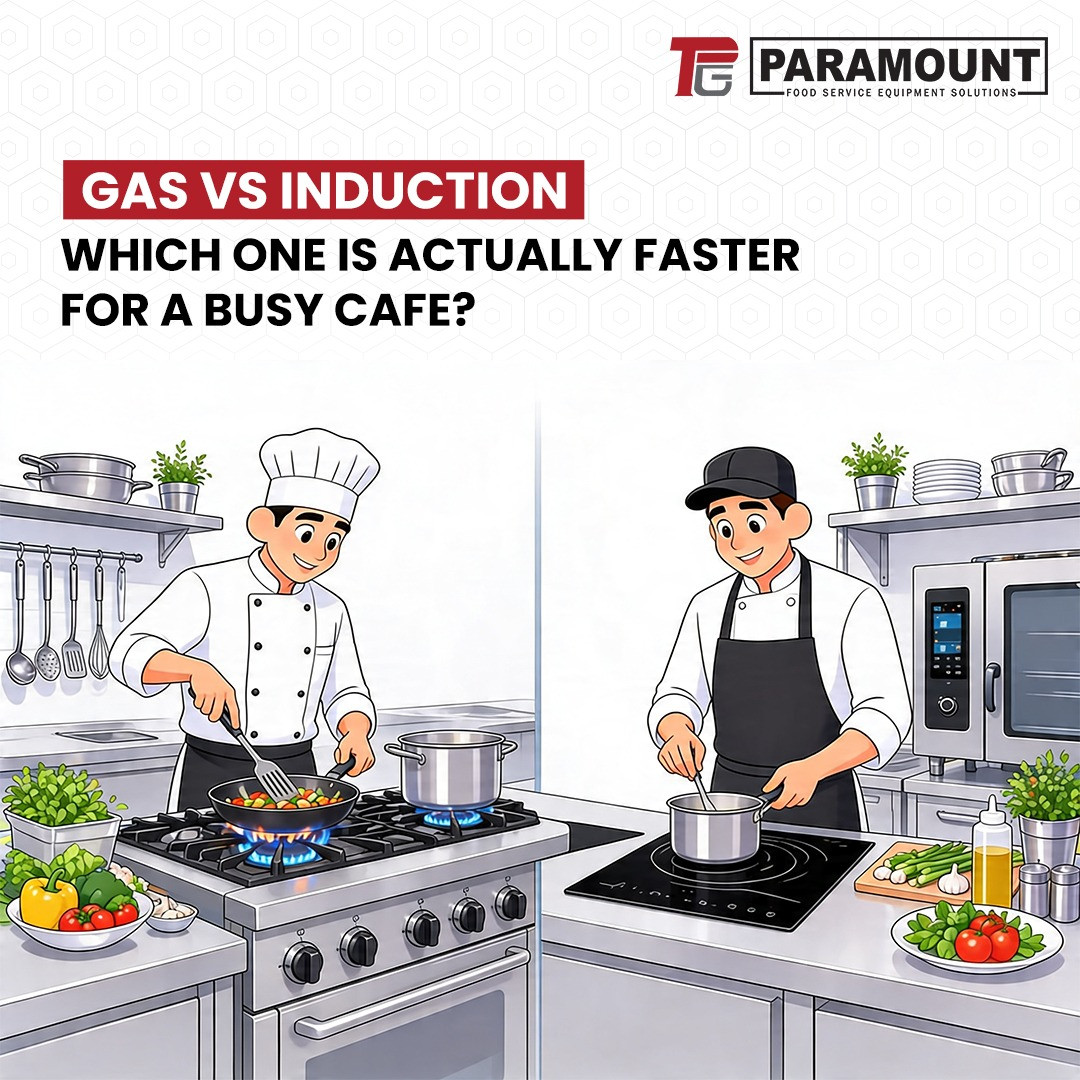
When comparing induction vs. gas in busy café environments, the difference becomes clear in day-to-day operations. Induction systems heat cookware directly, allowing faster preparation of items such as beverages, sauces, and light meals.
Speed advantages of induction:
- Rapid heat generation
- Shorter cooking times for repetitive tasks
- Consistent performance during peak hours
Gas cooking, while reliable, requires more time for indirect heat transfer, which can affect speed when managing multiple orders continuously.