How to Choose a Commercial Kitchen Equipment Supplier for a Cloud Kitchen Setup
By paramount
In India, cloud kitchens have emerged as an increasingly popular business model, allowing food entrepreneurs to operate without the space and costs associated with a traditional dine-in restaurant. By focusing primarily on food preparation, delivery, and efficient kitchen operations, cloud kitchens offer businesses greater flexibility while creating opportunities to run multiple food concepts from a single location.
As this model continues to expand, the demand for reliable commercial kitchen equipment in India is also increasing. However, setting up a successful cloud kitchen involves more than simply purchasing cooking appliances. Every piece of equipment needs to complement the menu, available space, production volume, workflow, and future growth plans. This makes choosing the right commercial kitchen equipment supplier an important decision from the very beginning.
Start with Your Kitchen Requirements
Before selecting a supplier, it is important to understand what your cloud kitchen actually needs. Equipment requirements vary depending on the cuisine, menu, order volume, kitchen size, and production process. An Indian food kitchen may require heavy-duty burners, tandoors, fryers, griddles, and food preparation equipment, while a pizza or bakery concept may need professional ovens, dough mixers, and specialised baking equipment. A good supplier should first understand your operation and then recommend equipment according to your requirements rather than simply presenting a standard catalogue.
Choose Equipment Based on Performance
Cloud kitchens often operate for long hours and need to process multiple orders within short timeframes. Equipment must therefore deliver consistent performance under demanding commercial conditions.
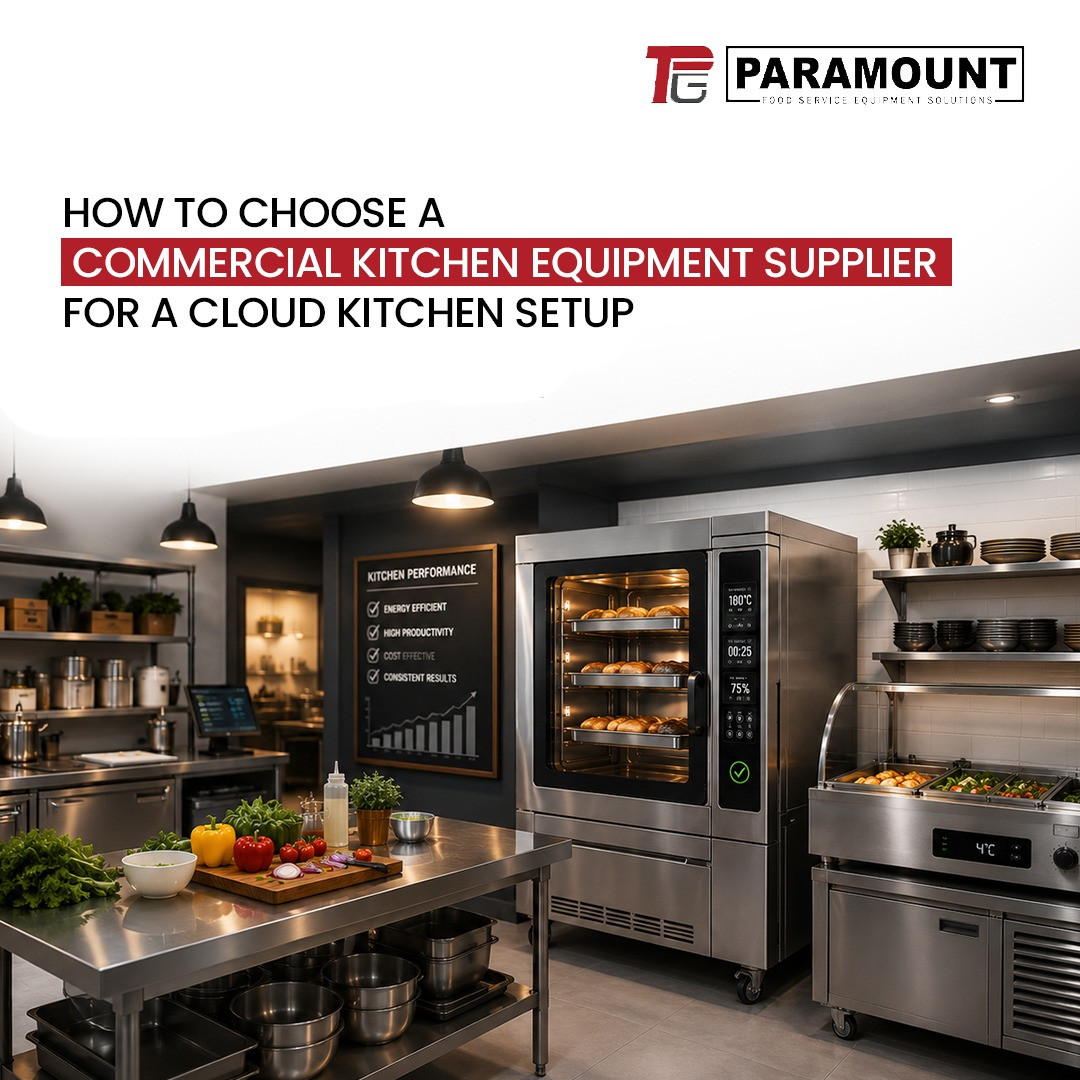
For professional cooking requirements, brands such as Rational and Unox can be considered depending on the menu and production requirements. Additionally, professional ovens and cooking systems can help improve consistency and make better use of kitchen time. When evaluating equipment, consider factors such as construction quality, capacity, ease of operation, cleaning requirements, energy efficiency, and expected service life.
Consider Commercial Refrigeration Carefully
Refrigeration is one of the most important parts of a cloud kitchen because ingredients need to be stored safely and efficiently. Vegetables, dairy products, meat, frozen foods, sauces, and prepared ingredients may all require different storage arrangements.
Depending on the kitchen layout and menu, requirements may include:
- Vertical refrigerators
- Freezers
- Under-counter refrigerators
- Refrigerated preparation counters
- Display chillers
- Cold-storage solutions
Brands such as Berjaya, Fagor, and Tecnodom offer professional refrigeration solutions that can be considered based on the requirements of the kitchen.
A supplier should help you determine the right capacity and configuration instead of recommending equipment based only on available models.
Evaluate Space and Kitchen Workflow
Space utilisation is particularly important in a cloud kitchen. Since there is no dining area, most of the available space needs to support food preparation, cooking, storage, cleaning, and order dispatch.
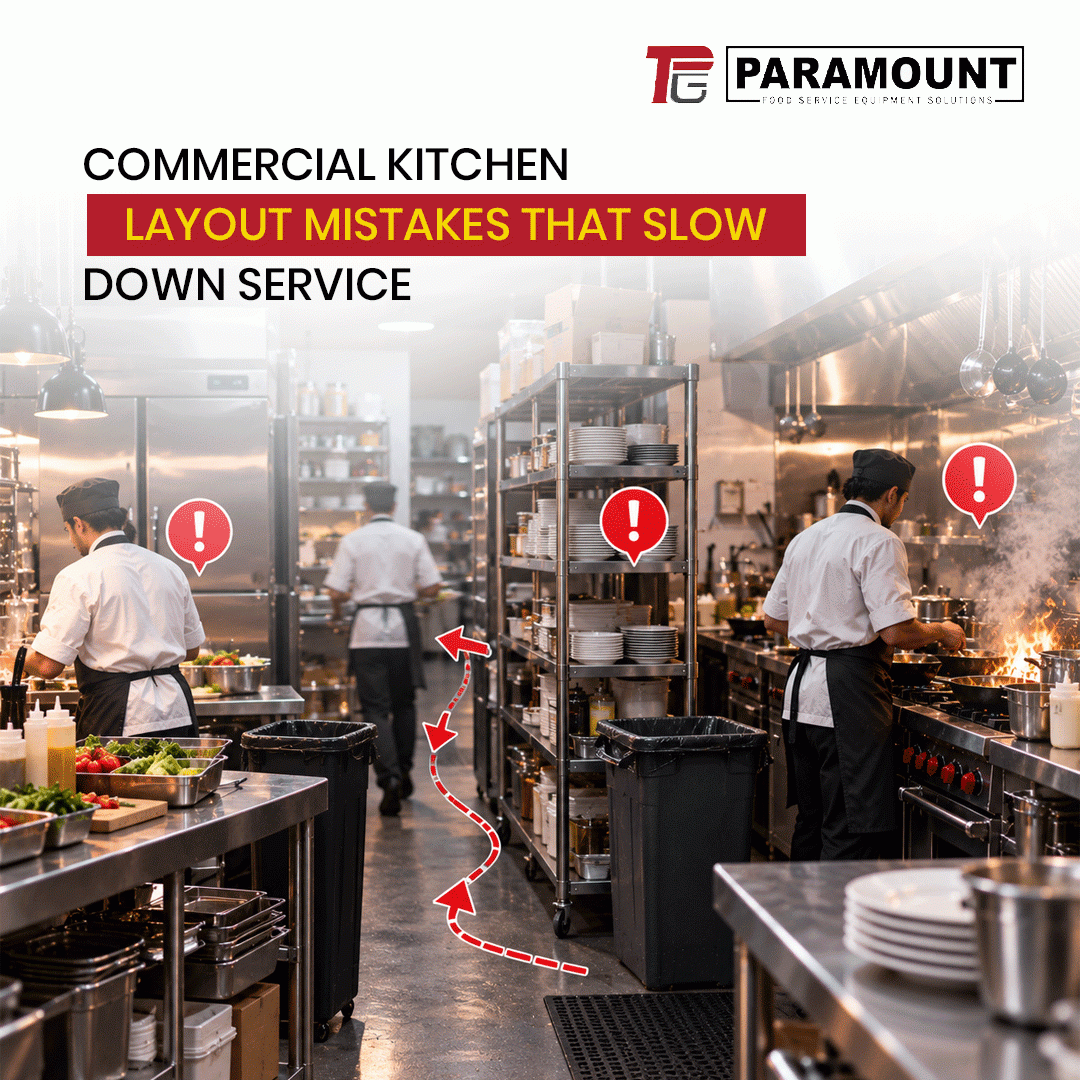
Equipment placement should allow staff to move efficiently between different workstations. Refrigeration should be easily accessible from preparation areas, cooking equipment should be positioned according to the production flow, and storage should be organised to minimise unnecessary movement.
An experienced supplier should be able to guide equipment dimensions, positioning, workflow, and space utilisation. Compact or multifunctional equipment can also be useful for kitchens operating within limited areas.
Look for a Complete Equipment Range
A cloud kitchen requires more than cooking appliances. Depending on the concept, you may also need refrigeration, food preparation equipment, stainless steel worktables, storage systems, ventilation, warewashing equipment, sinks, shelving, and other kitchen essentials.
Working with a supplier that offers a comprehensive range can simplify procurement and coordination. It can also ensure that different components of the kitchen are selected with the overall workflow in mind.
Businesses evaluating commercial kitchen equipment manufacturers India should therefore look beyond individual products and assess the supplier’s overall product portfolio, technical expertise, project experience, and ability to provide complete kitchen solutions.
Check Installation and Technical Support
Purchasing high-quality equipment is only part of the process. Proper installation is equally important for ensuring safe and efficient operation. Before choosing a supplier, check whether installation, commissioning, maintenance, and technical support are available. Ask about the availability of genuine spare parts and the supplier’s response process in case of equipment failure.
For a cloud kitchen, equipment downtime can directly affect order fulfilment. Reliable after-sales support can therefore help minimise disruptions and keep daily operations running smoothly.
Warranty coverage should also be reviewed carefully. Understand what the warranty includes, its duration, and how service requests are handled.
Compare Total Cost of Ownership
Price is an important consideration, particularly for startups, but the lowest initial quotation does not necessarily provide the best value. When comparing suppliers, consider the total cost of ownership. This includes the initial purchase price, installation, energy consumption, maintenance, spare parts, warranty coverage, and expected equipment lifespan.
Energy-efficient equipment may involve a higher initial investment but can help reduce operating expenses over time. Similarly, durable equipment with dependable service support can reduce the likelihood of frequent repairs and replacements.
Consider Future Expansion
A cloud kitchen may start with a small menu and limited order volume, but requirements can change as the business grows. New menu items may be introduced, production may increase, or additional locations may be opened.
The right supplier should be able to support this growth. Check whether they can provide additional equipment, replacement units, upgrades, and technical assistance when required.
Choosing a supplier with a broad product range and experience across different types of commercial kitchens can make future expansion easier and more consistent.
Prioritise Hygiene and Safety
Food hygiene and workplace safety should also influence equipment selection. Commercial kitchens require surfaces and equipment that are easy to clean and maintain.
Stainless steel workstations, appropriate washing facilities, effective ventilation, suitable storage, and well-designed food preparation areas can contribute to a cleaner and more organised working environment.
Ventilation and safety systems are particularly important in kitchens that use gas, fryers, ovens, and other heat-generating equipment. A supplier should understand these requirements and help integrate them into the overall kitchen setup.
Choose a Supplier, Not Just a Product
The right commercial kitchen equipment supplier should do more than deliver individual appliances. They should understand how your kitchen operates and help you select equipment that supports your menu, workflow, available space, production requirements, and future growth. From professional cooking equipment and refrigeration to preparation, storage, ventilation, and cleaning systems, every component should contribute to an efficient operation. Brands such as Rational, Unox, Berjaya, Fagor, and Tecnodom can be considered as part of a professional equipment selection based on the specific needs of the kitchen.
Ultimately, the best supplier is one that combines quality equipment with end-to-end equipment service, covering consultation, equipment selection, installation, commissioning, maintenance, and after-sales support. For a cloud kitchen, having a reliable partner throughout the equipment lifecycle can help ensure smoother operations, minimise downtime, and provide the support needed as the business grows.