How Blast Chillers Improve Food Preservation and Kitchen Efficiency
By paramount
Is refrigeration alone enough to preserve the quality and safety of cooked food? Not always.
Refrigeration plays an important role in food storage, but it is not designed to rapidly cool freshly . When hot food cools slowly, it remains longer within the temperature range where bacteria can multiply quickly, affecting food safety, shelf life, texture, and overall quality.
Blast chillers are designed to overcome this challenge. By rapidly reducing food temperature in a controlled environment, they help commercial kitchens maintain food safety, preserve freshness, reduce waste, and improve production efficiency. As food businesses increasingly invest in advanced commercial kitchen equipment India, blast chillers have become an essential solution for restaurants, hotels, bakeries, cloud kitchens, catering businesses, and food manufacturing facilities.
What Is a Blast Chiller?
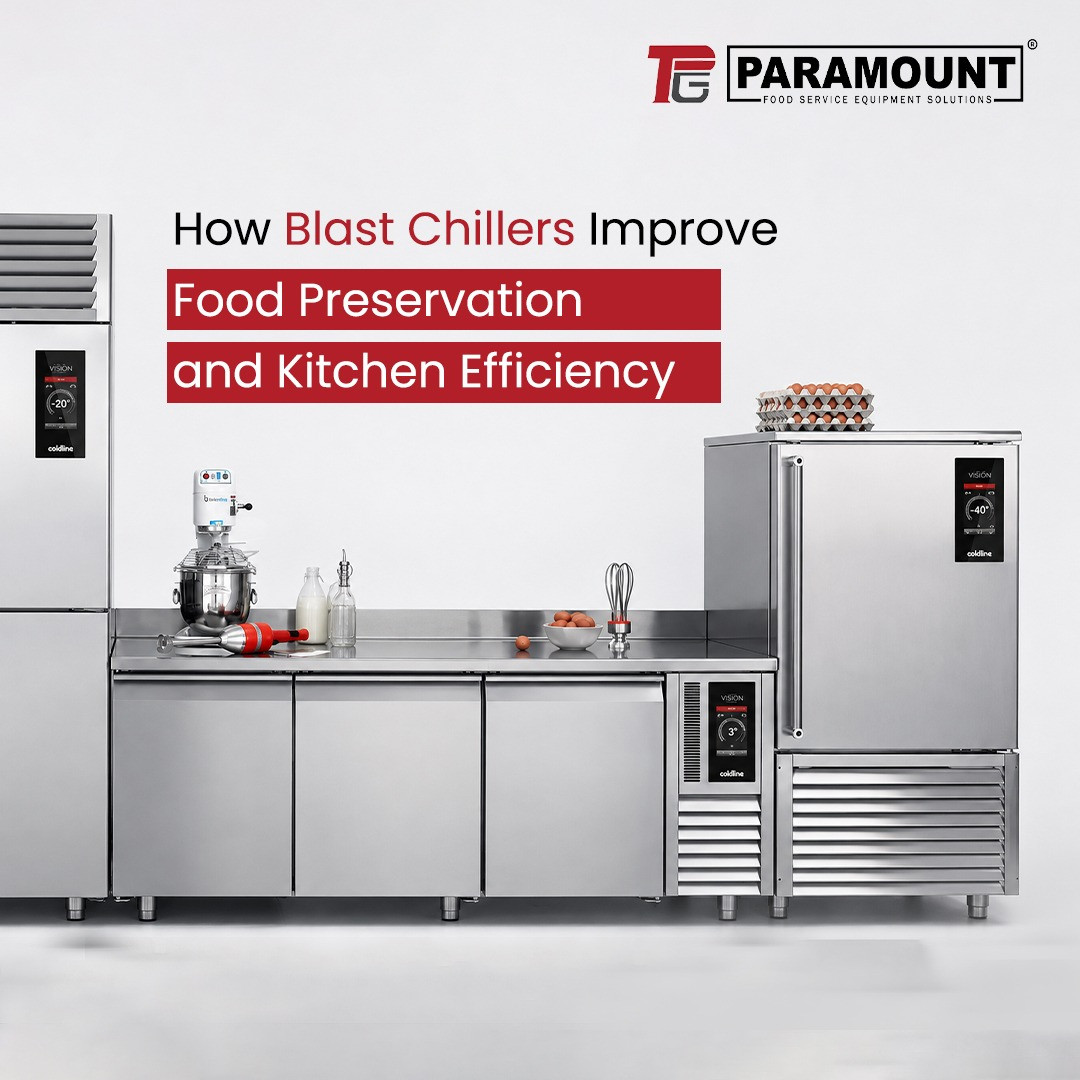
A blast chiller is a specialised refrigeration system designed to rapidly cool freshly cooked food using high-velocity cold air and precise temperature control. Unlike conventional refrigerators that are mainly used for storing already cooled food, blast chillers actively remove heat from freshly prepared products.
The rapid cooling process helps preserve food quality while supporting food safety practices such as HACCP (Hazard Analysis and Critical Control Points). Depending on the model, some blast chillers also provide freezing capabilities for longer-term preservation.
Key features of blast chillers include:
- Rapid cooling through forced cold-air circulation.
- Consistent temperature control throughout the food.
- Programmable cooling cycles for different food types.
- Temperature monitoring for better process management.
- Suitable for cooked meals, meats, seafood, bakery products, pastries, sauces, desserts, dairy products, and ready-to-eat foods.
Why Does Rapid Cooling Matter?
Food safety organisations, including HACCP-based systems, emphasise the importance of controlling temperature during the cooling process. Rapid cooling helps reduce the time food spends in the temperature danger zone, limiting conditions that encourage bacterial growth.
Compared with traditional refrigeration, blast chilling offers better control over the cooling process.
| Conventional Refrigeration | Blast Chilling |
| Designed mainly for storing chilled products | Designed for rapidly cooling freshly prepared food |
| Removes heat slowly | Uses powerful airflow for faster cooling |
| Food may remain longer in the danger zone | Helps minimise time in the danger zone |
| Can affect moisture and texture during slow cooling | Helps preserve quality and consistency |
| Limited support for production planning | Supports batch preparation and organised workflows |
Key Differentiators of Blast Chillers
Blast chillers are different from standard refrigeration equipment because they combine speed, precision, and food preservation capabilities.
Major differentiating factors include:
- Rapid temperature reduction: Quickly lowers food temperature compared to traditional cooling methods.
- Improved food safety: Supports controlled cooling processes aligned with HACCP principles.
- Better quality preservation: Helps maintain flavour, texture, moisture, and appearance.
- Production flexibility: Allows kitchens to prepare food in advance and store it safely.
- Reduced food waste: Helps extend the usable life of prepared products.
- Better operational control: Enables more organised kitchen planning.
How Blast Chillers Improve Kitchen Efficiency
Commercial kitchens need solutions that improve speed, consistency, and productivity without affecting food quality. Blast chillers allow businesses to separate food preparation from service periods by safely cooling and storing prepared food until required.
They help businesses to:
- Prepare food in larger batches.
- Reduce last-minute preparation during peak hours.
- Improve production scheduling.
- Maintain consistency across multiple batches.
- Optimise labour utilisation.
- Improve inventory management.
- Reduce food waste.
- Support safer food handling procedures.
- Increase overall kitchen productivity.
Where Are Blast Chillers Commonly Used?
Blast chillers are used across industries where food safety, consistency, and efficient production are priorities.
Common applications include:
- Restaurants and hotels
- Cloud kitchens
- Bakeries and pastry shops
- Catering businesses
- Food manufacturing units
- Hospitals and institutional kitchens
- Airline and railway catering
- Ready-to-eat food production facilities
Trusted Blast Chiller Brands
Selecting reliable equipment plays an important role in achieving consistent cooling performance, energy efficiency, and long-term operational value. Tecnodom, Fagor, and Lotus are recognised brands offering professional blast chilling solutions for commercial kitchens and food production environments.
When selecting a blast chiller, businesses should consider production capacity, cooling requirements, energy efficiency, available space, ease of operation, and after-sales support.
Final Thoughts
Food preservation is no longer only about storing food at the right temperature. It involves maintaining safety, quality, efficiency, and consistency throughout the production process.
Blast chillers provide commercial kitchens with a reliable solution for rapid cooling, helping preserve food quality, reduce waste, improve workflow, and support recognised food safety practices. As businesses continue investing in advanced commercial kitchen equipment manufacturers India can help create more efficient, productive, and future-ready food operations.